
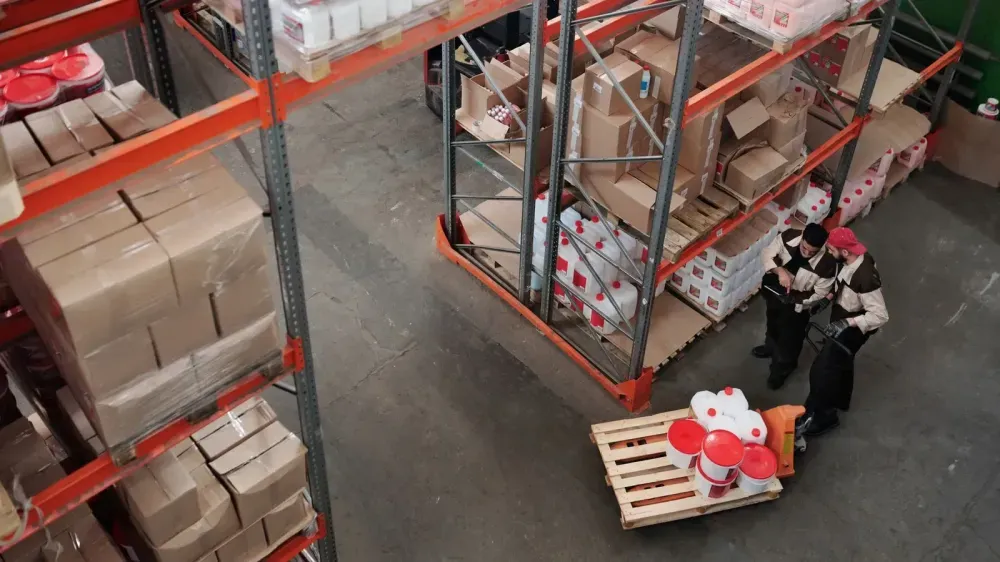
Case Study: An Automotive Parts Manufacturer Cuts Picking Errors with iStock WMS
From warehouses that each kept their own records to one shared, accurate stock dataset for the whole organisation.
Published
Each zone kept its own records, so no single stock figure could be trusted.
Receiving, issuing and transfers all run through handheld mobile devices.
SKUs and storage locations follow a single standard across the whole warehouse.
Picking errors fell by 80%.
Overview: an automotive parts warehouse where every item has to be exact
The customer manufactures automotive parts and stores thousands of spare parts and raw materials that feed the production line. A single picking mistake does not just distort a report; it can stop the line and add avoidable cost. The team needed a system that answers three questions instantly: where is the item, how much is left, and who moved it.
- High-value parts in many models and sizes make visual matching against a code error-prone.
- The warehouse is split into several zones, each with its own recording habit.
- Production and accounting both need the stock figure every day.
The problems before the project started
The symptoms were the ones almost every industrial warehouse recognises: the system figure and the shelf disagreed, and by the time anyone noticed, several counting cycles had passed. The root cause was not the people on the floor. It was that each zone recorded separately, so there was no single version of the truth to trust.
- Staff spent hours hunting for items because no shared location reference existed.
- Some stock quietly disappeared from the system and was never found again.
- Paper-based counts drifted further from reality every cycle and took days to finish.
- Production could not rely on the remaining-stock report to make decisions.
The chosen approach: iStock WMS with one code and location standard
The team adopted iStock WMS as the warehouse system of record and started by cleaning up the data before installing anything. A capable system on top of inconsistent codes and locations still produces inconsistent answers, so the design work came first.
- Define one SKU and storage-location (Location / Bin) structure that every zone shares.
- Label both the rack and the item so a single scan returns the code and its location.
- Run receiving, issuing and inter-zone transfers on handheld mobile devices, with stock deducted the moment a movement is recorded.
- Give warehouse, production and accounting the same reports, so everyone reads the same numbers.
How the rollout was delivered
The project began with a survey of the real floor, working with the warehouse supervisors to map how goods actually move. Only then did the team design the code and location structure around the existing workflow, so staff could change tools without relearning their jobs.
- Survey and map the goods flow, then define zones and storage locations.
- Prepare and de-duplicate the master data before the first import.
- Install the software and scanning hardware, and connect it to the systems that share the data.
- Train each team on its own tasks and go live step by step.
- Follow up after go-live and keep the installation supported.
The results after go-live
The clearest change is that the whole organisation now works from one stock dataset. Picking errors dropped sharply, and finding an item is no longer a task that consumes a shift. The figures below are the outcomes the company has verified and approved for this case study.
- 80% fewer picking errors, down from the wrong picks and inefficient space use of disconnected warehouses.
- What used to be separate, inconsistent stock records became one shared, accurate dataset for the whole organisation.
- Staff find items faster because every item carries its location in the system.
- Stock updates the moment a movement happens, removing end-of-shift re-keying.
Let our engineers pick the right hardware and labels for your site
Send us a sample or describe your site and the iStock Express team will run the tests and report back before you invest.